
Nacogdoches Previous Residents Sources
Previous residents are documented in layers. Start with a parcel and deed chain for ownership, then use directories, telephone books, census records, newspapers, maps, cemetery entries, or probate material to test who appeared at that place in a particular period. A source may identify an owner, a subscriber, a household member, an heir, or a historical mention. Those roles should stay distinct. The source date is also essential because a historical appearance does not establish current residence.
| Source | Years it covers | Where held | What it shows |
|---|---|---|---|
| Official records index | Current online start year not stated | Nacogdoches County Clerk GovOS portal | Grantors, grantees, instrument data, and legal-description leads |
| County deed microfilm | 1835–1887; index reels 1833–1893 | Texas State Library and Archives Commission | Older deed volumes, indexes, parties, and legal descriptions |
| Nacogdoches directories | 1935, 1939, 1947, 1960, 1980s, and 1991–1993 holdings noted | SFA East Texas Research Center and local repositories | Dated names, addresses, phone clues, and some household details |
| Telephone directories | 1919, 1920, plus later listed runs | ETRC Baker item | Subscribers, address clues, and rural service reach |
| Daily Sentinel | Online corpus, 1900–1912 | UNT Portal to Texas History | Notices, obituaries, events, and date-specific public context |
| Federal census | 1950 publicly available; 1960 unavailable until 2032 | National archival access | Household information that must be reconciled with historical geography |
For a Nacogdoches house with a recent deed, begin with the official index and work backward. For an early twentieth-century address, a phone book, directory, newspaper, and map may provide a more useful first date. When the trail reaches the nineteenth century, deed microfilm and archive finding aids become more important than a current online portal.
The Texas State Library and Archives Commission city-directory holdings identify Nacogdoches volumes that can anchor a dated household search.
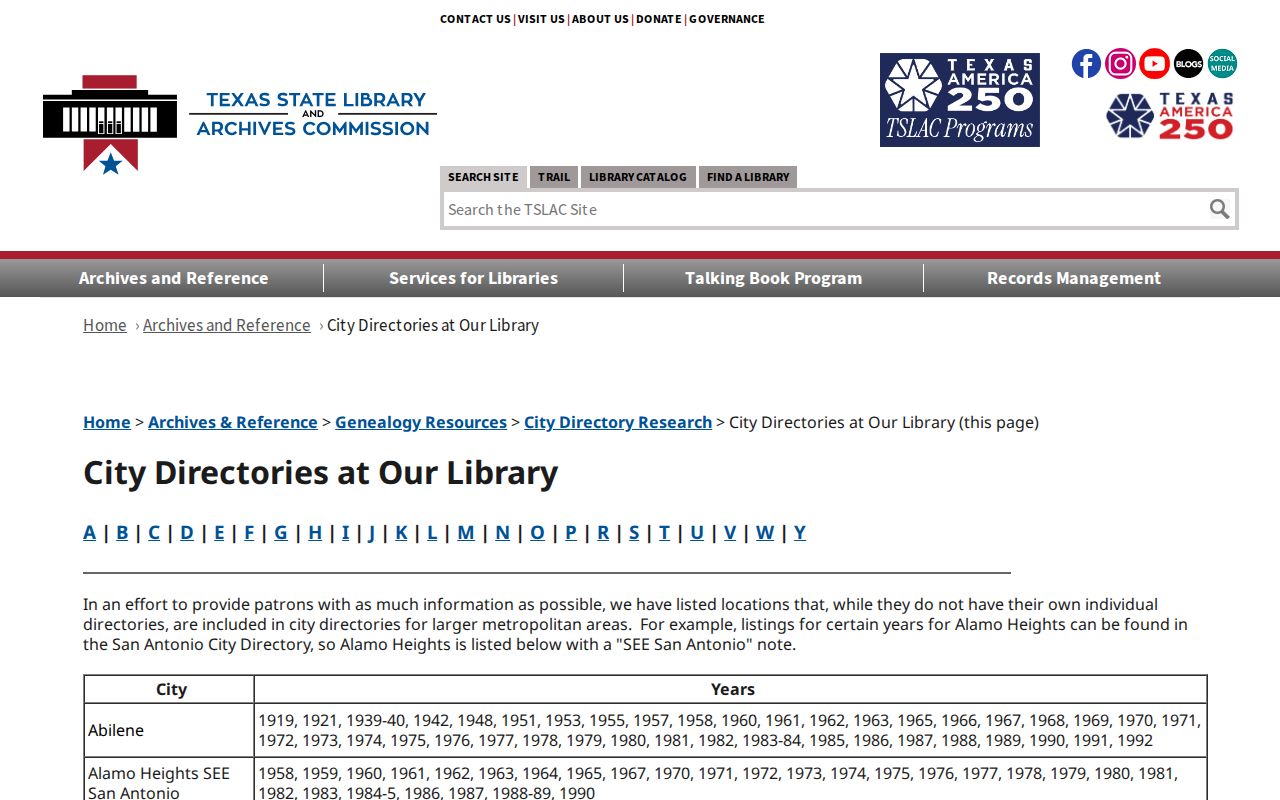
Use the holdings list to choose a year, then verify the actual volume through the repository before treating a listed address as evidence for previous residents.
Nacogdoches Deed-Chain Steps
For previous residents, a deed chain begins with the current appraisal parcel, then moves from the present owner’s purchase back to the seller’s earlier acquisition. The owner field is only a starting point. The important continuity check is the legal description, which may include a subdivision, lot, block, tract, survey or abstract, acreage, or recorded volume and page. It protects the search from taking a same-name grantor down the wrong Nacogdoches property trail.
- Find the property in the Nacogdoches Central Appraisal District search. Copy the property address, owner field, Property ID, Geographic ID, account if shown, and full legal description.
- Search the current owner or legal-description clues in the official Nacogdoches records index. Locate the purchase instrument and note its recorded date, number, document type, parties, and description.
- Use the seller from that instrument as the next party to research. Compare the sale date, acreage, lot or block, subdivision volume or page, and instrument type before treating the earlier transaction as the same parcel.
- Repeat the backward search one conveyance at a time. Stop and mark the uncertainty if a split, consolidation, or changed legal description cannot be reconciled.
- When the online trail ends, use the TSLAC local microfilm listing, interlibrary loan where available, or a County Clerk copy request for the older volume and index route.
- Grantor
- The person or entity conveying an interest in an instrument, commonly the seller in a transfer.
- Grantee
- The person or entity receiving an interest in an instrument, commonly the buyer in a transfer.
- Chain of title
- The dated sequence of recorded transfers used to trace an interest in the same land backward.
- Legal description
- The recorded land description that links a deed to a particular parcel more reliably than a street number alone.
Nacogdoches GovOS Index Trail
The county-linked GovOS index offers Quick Search and Advanced Search. Its prompt accepts grantor or grantee, subdivision, document type, or document number, with recorded-date fields and quick date ranges. Search Index Only works differently from Search Index & Full Text (OCR): the portal says multiple words can be searched individually in the index, while OCR phrase searching uses a phrase. That distinction can matter when a legal description or party name is hard to read.
The index is a locator, not a complete history by itself. The official portal did not state a starting year, even though it displayed county certification through August 30, 2026 during the research inspection. Keep an instrument number, recorded date, document type, and legal-description note at every step. A plain or certified copy comes from the County Clerk, not from an assumption that an index entry proves every fact in the underlying document.
Note: A missing online result may reflect the portal’s unstated coverage boundary, indexing, OCR, or a change in legal description rather than a break in ownership.
Nacogdoches Directory Census Pairing
Deeds follow property interests. Directories and census material are the household layer for previous residents. State-library directory instructions explain that entries can include a name, street address, telephone number, spouse, and sometimes other details, depending on the publisher and year. The ETRC holds Polk’s Nacogdoches volumes for 1960, 1984, 1985, and 1989. A local bibliography also identifies a 1935 Brown’s directory, a 1939 city directory, 1947 and later Polk volumes, and several Southwestern Bell books. Confirm the exact repository and completeness before relying on a gap-free run.
- Choose a directory or phone-book year close to the address event being studied, and transcribe the name exactly as printed.
- Save the street form, number, page, publisher, year, and repository. Initials, widow notations, and spelling variants should remain in the note.
- Compare the address with the nearest public census year, knowing that 1950 is public and 1960 is not due until 2032 under the national release schedule.
- Test the household against a deed, newspaper item, cemetery entry, or probate reference. Label the result as an owner, subscriber, household member, or historical appearance.
The collections themselves are organized in the Nacogdoches Directory Book. A past-resident note becomes more useful when it preserves the directory’s date and page instead of converting a one-year listing into a permanent claim about the house.
Nacogdoches Previous Residents Maps
Maps help reconcile a historical place before a name is attached to it. The TSLAC city-map catalog includes an 1846 plan and later Nacogdoches maps from 1961 through 1991. The SFA preservation study identifies Sanborn maps for 1885, 1891, 1896, 1902, 1907, and 1927. Those maps can reveal a structure’s materials, stories, use, outbuildings, lot, or change through time. They are strong evidence for what stood at a location, not for who lived there.
Nacogdoches is a city and county seat, so historical records may refer to a city address, a rural place, a county jurisdiction, or an earlier boundary. Compare the historic street form, cross street, subdivision, and legal description with the current City Parcels FeatureServer. Its property and mailing fields are distinct. A map line, ZIP, or mailing destination is not proof of the person occupying the parcel.
For a later clue, the Oak Grove index has name, birth date, death date, section, block, and lot columns. Pair a cemetery entry with a directory, a newspaper issue, and another record when names are common. A burial at Oak Grove does not establish residence at the time of death.
Nacogdoches Archive Record Routes
The ETRC Nacogdoches County Records finding aid covers 1826–2012 and is open for research. Its series include deed, marriage, probate, tax, survey, land-commission, birth, death, school, sheriff, Department of Nacogdoches, and city records in English and Spanish. This is an offline repository route when the online index is too recent, too narrow, or unable to resolve an address. A finding aid identifies material; it does not guarantee that an original item is still at the same desk.
Check the ETRC County Records finding aid for the series, date span, and current research status before arranging archival work.
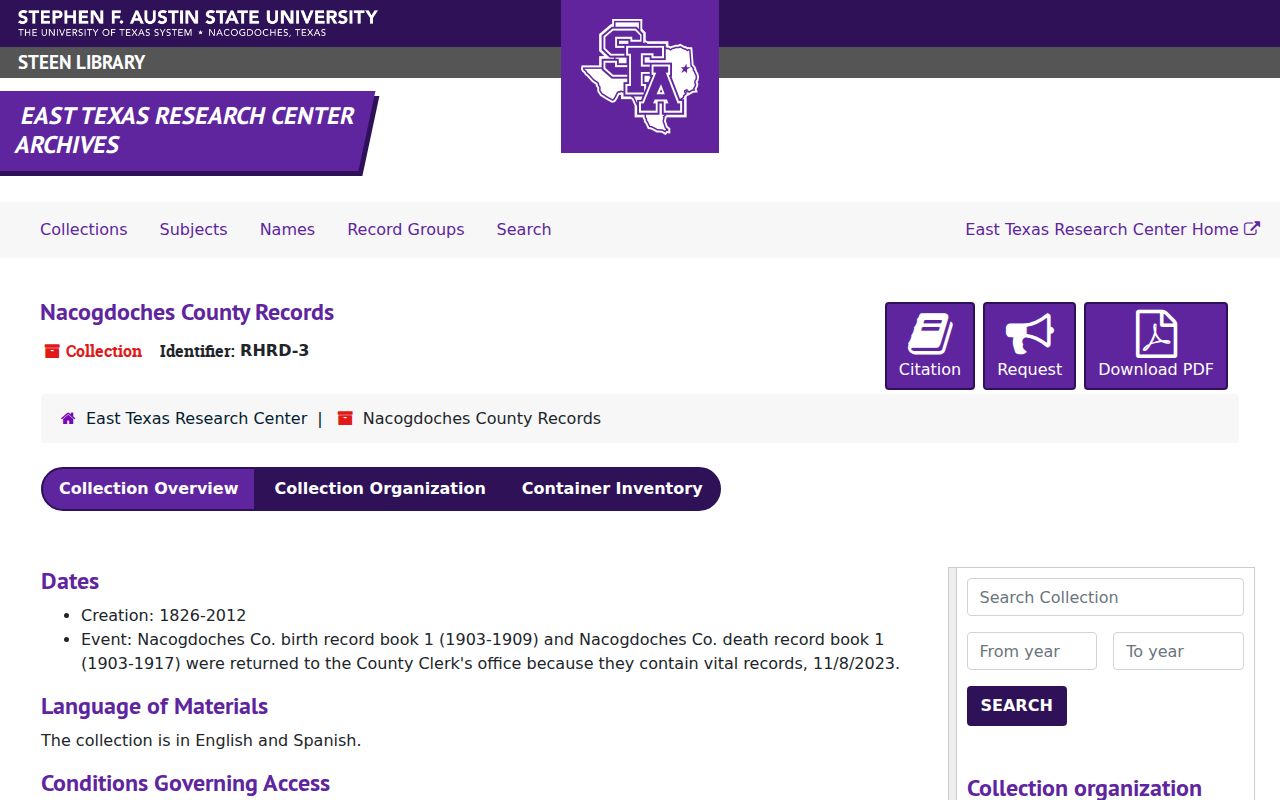
One access detail is especially important: the finding aid says the 1903–1909 birth book and the 1903–1917 death book were returned to the County Clerk on November 8, 2023. A researcher who sees those books in the finding aid may need to contact the Nacogdoches County Clerk instead. The Nacogdoches Public Library is another local contact for confirming available materials, although its public page does not list a complete genealogy or city-directory inventory.
Nacogdoches Archives Before Statehood
The TSLAC Nacogdoches archives guide extends the historical trail into Spanish and Mexican periods. It covers official correspondence, military, land, census, election, entrance-certificate, and oath records. The Texas Digital Archive path can be filtered by record group, reel, correspondence status, name, location, date, and record group. Texas residents also have the stated access route to the related Ancestry collection, while TSLAC offers onsite microfilm and local libraries may obtain up to five reels through interlibrary loan.
Use the filters and reel links on the TSLAC Spanish and Mexican Nacogdoches archives guide to preserve the original record group and image trail.
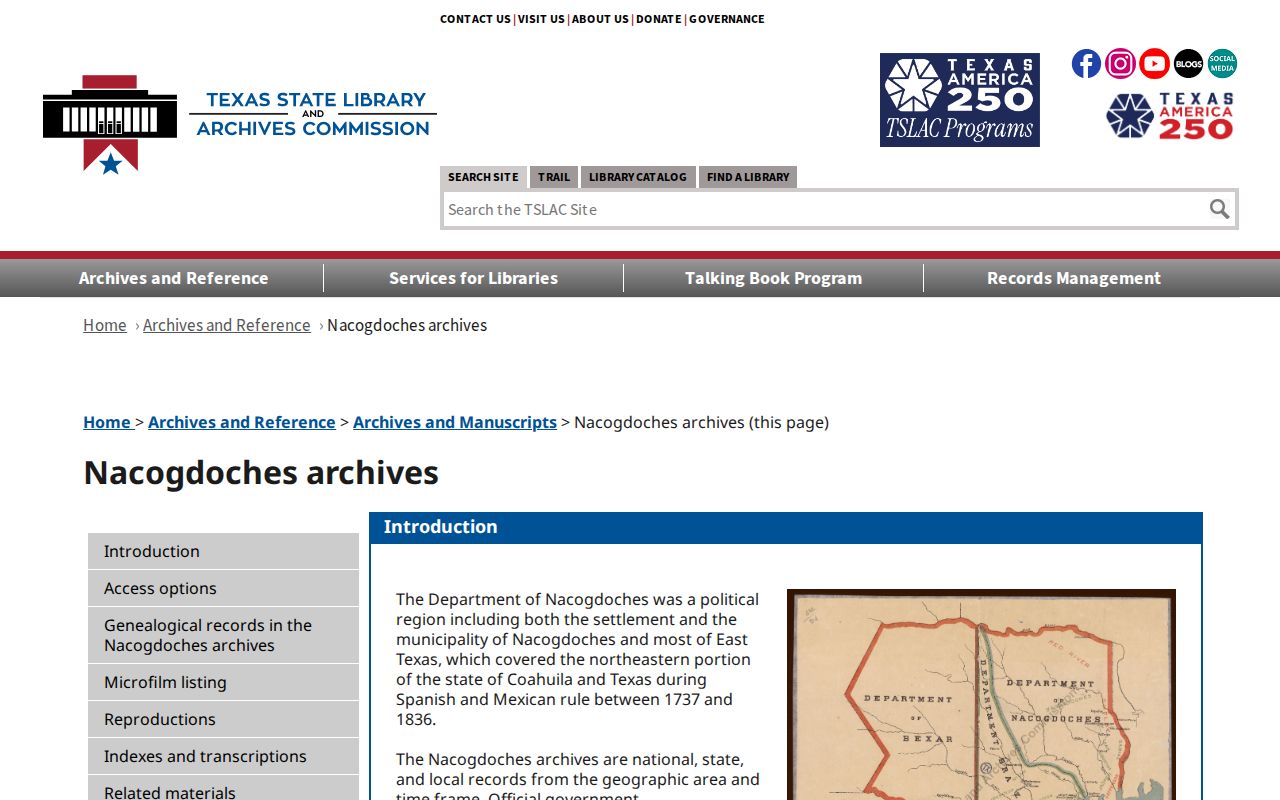
Mission rolls, eighteenth-century censuses, ranch censuses, a 1828 padron, foreigner lists, and election records can contain names, family, residence, nationality, age, marital status, occupation, religion, or dates. Preserve the original language and spelling, plus the reel or image reference. The material is valuable for family history, but it is not a substitute for a deed, directory, or map that ties a later person to a specific Nacogdoches address.
Nacogdoches Previous Residents Limits
A past-resident search is strongest when it states exactly what a record supports. A deed supports a recorded transfer. A directory supports an entry in a published year. A newspaper can provide a dated notice that needs context. An archive citation identifies material preserved by a repository. Missing decades can result from publication, preservation, indexing, or jurisdiction, rather than proving that no one lived at an address.
The practical end point is a dated, source-labeled address history. Keep names, dates, record numbers, legal descriptions, and repository identifiers separate from conclusions. For records held by a government office, use the custodian’s request process under the Texas Public Information Act, Government Code Chapter 552 when inspection or copies are needed.