
Nacogdoches City Directory Holdings
Nacogdoches directory volumes survive in several repositories, but no single shelf supplies a complete run. The Texas State Library and Archives Commission lists Nacogdoches volumes for 1960, 1962, 1984, and 1985. The SFA East Texas Research Center Cox collection identifies Polk volumes for 1960, 1984, 1985, and 1989. A Nacogdoches TXGenWeb bibliography provides additional leads, including a Brown directory from 1935, a 1939 volume, and Polk years from 1947 through the early 1990s. Its listings are finding aids, so confirm the exact volume, page, and physical location before relying on one.
| Collection | Years | Where Held | Access |
|---|---|---|---|
| TSLAC Nacogdoches volumes | 1960, 1962, 1984, 1985 | Texas State Library and Archives Commission | Repository holdings, with print or microform routes |
| Polk Nacogdoches directories | 1960, 1984, 1985, 1989 | SFA East Texas Research Center Cox collection | Finding-aid lead; check access and volume status |
| Brown, 1939, and later Polk leads | 1935; 1939; 1947, 1980, 1984, 1985, 1987, 1991-1993 | Repository-specific local bibliography leads | Verify custody and completeness before a visit |
| Nacogdoches phone directories | 1919, 1920; later listed Bell years | ETRC Baker item and local bibliography | Historical subscriber and address clues |
These runs overlap without becoming interchangeable. A 1960 directory appears in both state and university holdings, while a year listed in a local bibliography may require a direct repository check. The sources inspected did not establish the first or last printed Nacogdoches directory. Treat a missing year as a publication, preservation, cataloging, or access gap, not proof that a household was absent.
Note: Record the repository, year, publisher, page, and exact printed form before matching an entry to any other historical source.
Nacogdoches Directory Shelf Routes
The public library is a sensible local starting point when a needed volume is not visible online. Its public page gives the address as 1112 North Street, phone 936-559-2970, email askalib@nactx.us, and hours of Monday through Thursday 9 a.m. to 8 p.m., Friday 9 a.m. to 6:30 p.m., and Saturday 10 a.m. to 4 p.m. The page does not publish a detailed city-directory, obituary, or microfilm inventory. Contact the library first to confirm local-history access, the year sought, and whether staff can direct a visitor to a shelf, film reader, catalog record, or another repository.
The public Nacogdoches Public Library page supplies the local contact route for historical directory questions.

Library contact information is useful when a catalog description does not reveal whether a specific directory year is present or usable.
State research materials also offer alternatives. Their city-directory guidance points to print and microform holdings, WorldCat, Ancestry Library Edition onsite, and HeritageQuest. Those routes may identify a cataloged volume or a nearby holding, but the local title, publisher, and date still need to match the evidence being cited.
Nacogdoches Telephone Directory Clues
The earliest identified subscriber window is unusually useful. The ETRC Baker item identifies Nacogdoches telephone directories from 1919 and 1920. The finding aid says they can help identify telephone subscribers, rural service reach, and advertisements. The local bibliography adds Southwestern Bell references for 1927, 1933, 1934, 1937, and 1944. A telephone listing may name a person, household, or business, so it is evidence of a dated subscriber entry rather than a general statement about every occupant at an address.
Transcribe the title, publisher, year, page, name exactly as printed, address or phone as printed, and repository. Preserve initials, honorifics, exchange formats, and old street spellings. A spelling change can be the clue that connects two entries, but it can also separate two unrelated people with similar names.
How Nacogdoches City Directory Entries Read
A state directory research guide explains that entries can include a name, street address, telephone number, spouse, and sometimes an occupation or a publisher's address-status notation. Fields vary by publisher and year. The local research did not capture a Nacogdoches page image or abbreviation key, so do not assign a local meaning to a mark until the key in that specific volume supports it.
| Name | Copy surname, given name, initials, title, former name, or widow notation exactly as printed. |
|---|---|
| Household marker | Record a spouse in parentheses or a separate household entry only when the volume shows it. |
| Occupation or organization | Keep the publisher's wording and abbreviations. Do not expand an abbreviation without the key. |
| Address and phone | Capture the street number, street name, unit or route, and telephone exchange in the printed form. |
| Address-status mark | Copy a publisher's symbol only when the volume's key explains its meaning. |
| Citation detail | Save directory year, publisher, page, repository, and any scan or call number. |
The fields below keep a city-directory reading from becoming an unsupported household claim.
- Criss-cross directory
- A street-order section, when a volume includes one, that groups entries by address rather than by name.
- Householder index
- A name arrangement that may foreground the person identified as the household contact in that particular volume.
- Abbreviation key
- The publisher's explanation of shortened words and symbols, usually placed near the front or back of a volume.
- Historical appearance
- A documented name, address, subscriber, or organization reference tied to one date, not a present-day conclusion.
Nacogdoches City Directory Time Markers
Known Nacogdoches directory evidence forms a useful, if incomplete, timeline. The sequence begins with phone books, then moves through named city-directory leads and later Polk holdings. The chronology helps select the right companion source for a household without inventing a continuous publishing run.
- 1919-1920: ETRC identifies Nacogdoches telephone directories, a dated subscriber window before the listed city-directory leads.
- 1935 and 1939: The local bibliography identifies Brown and a 1939 Nacogdoches directory lead, each requiring repository confirmation.
- 1947 and later: The bibliography lists Polk volumes for 1947, 1980, 1984, 1985, 1987, and 1991 through 1993.
- 1960-1989: TSLAC and ETRC document overlapping selected holdings, including 1960, 1962, 1984, 1985, and 1989.
- 2025: The Cox finding aid was dated September 25 and identified its Polk volumes as a current archival finding-aid lead.
Federal census release timing adds a separate rhythm. Census years can anchor a household around the directory years, but the national 72-year release rule means 1950 is available while 1960 remains unavailable until 2032, subject to the National Archives schedule. Directories fill some intervening years, not every year.
Trace Nacogdoches City Directory Households
For family history, start with one confirmed printed entry and follow it in short, dated steps. An address can provide a geographic thread, while changing initials, a spouse notation, or a new phone listing can suggest a question for another source. The goal is a record trail that distinguishes a subscriber, household member, owner, burial, or organization member instead of combining every similar result into one person.
- Find the first directory or telephone entry with the exact printed name, then note the year, page, address, and publisher.
- Check the next available Nacogdoches volume, preserving spelling variants and recording each address change rather than assuming a move.
- Compare each directory period with the nearest available census year, then note whether the census geography and modern street form differ.
- Use a street-order or criss-cross portion only if that volume includes one, and label nearby entries as date-specific address neighbors.
- Test the result against a newspaper notice, deed, probate index, cemetery entry, or map before stating a relationship or a long-term household connection.
A disappearance can mean many things: a move, death, unlisted telephone service, a changed name, a missing volume, or a different listing practice. The University of North Texas Daily Sentinel collection provides a digitized 1900-1912 corpus of 2,982 issues and 12,075 pages, while later holdings require a repository check. Save the issue date, page, headline, and exact wording when using a notice as a second source.
Note: Census, directory, and newspaper records can disagree because each recorded a different date, purpose, and reporting method.
Nacogdoches Maps, Notices, and Burials
An address is more reliable when its place and date are checked separately. The state city-map catalog returns nine Nacogdoches city-map records, including an 1846 plan and maps from 1961 through 1991. Sanborn maps cited in local SFA studies add building and lot context for selected years. Maps can explain a changed street, block, or parcel pattern, but they answer what stood in a place better than who lived there.
The City of Nacogdoches cemeteries page supplies another dated route through Sunset Memorial, Oak Grove, Pine Grove, and Zion Hill, as well as the Oak Grove index.
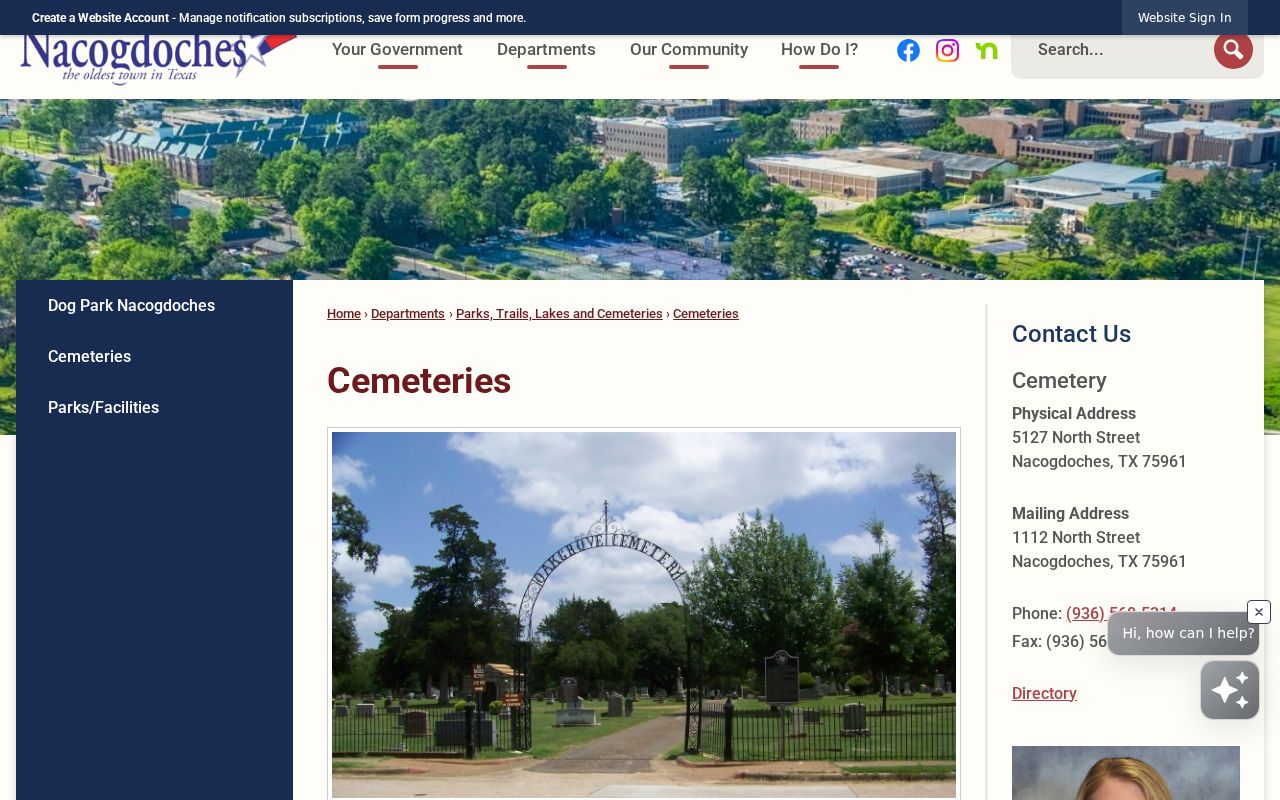
A cemetery listing can help close a historical trail, but it should be paired with an independent identity source and never treated as evidence of current residence.
The Oak Grove index, dated November 18, 2024, supplies name, birth date, death date, section, block, and lot fields. Those structured fields can be compared with a directory date or newspaper notice. A burial location is a historical record of burial, not a statement about a person's last home or every family member.
Nacogdoches Directory Research Contacts
Historical directory research sometimes ends with a custodian question. The city staff directory lets users route a request by category, first name, or last name when the needed question concerns a city department, library, cemetery, or historic-site contact. It is a public office-routing directory, not a resident list. For city minutes, agenda packets, ordinances, contracts, deeds, or public-information requests, use the responsible city records-management office.
The City staff directory shows the city contact structure that can help a researcher reach the proper public desk.
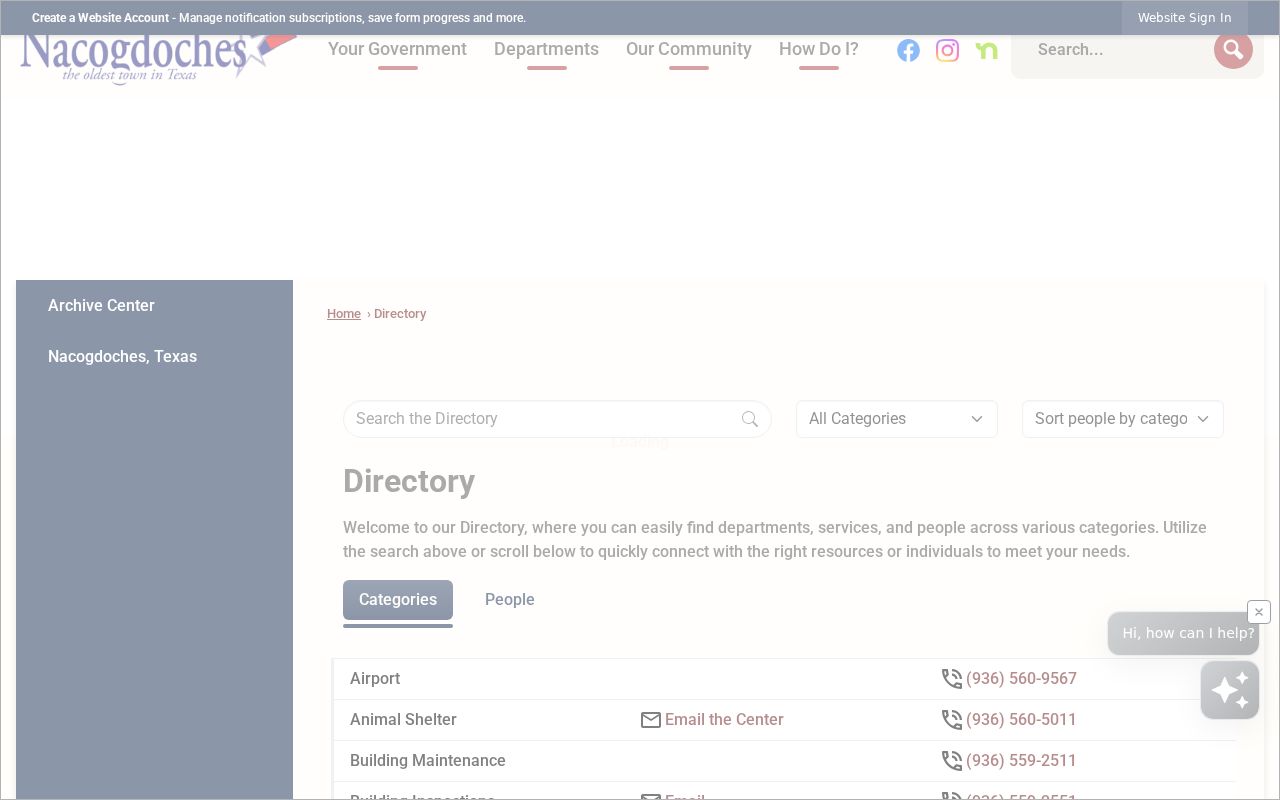
Use public staff listings to locate a department, then ask that office about its own records, retention, and request process.
Nacogdoches Archive Custody Changes
Repository descriptions can change. The ETRC Nacogdoches County Records finding aid covers 1826-2012 and identifies wide county series, including deed, probate, tax, vital, and city material. It also notes that a 1903-1909 birth book and a 1903-1917 death book returned to the local custodian in 2023. A finding aid is therefore a lead to current custody, not a guarantee that an item remains on the archive shelf or is online.
The ETRC top-container record records a County Court Records transfer dated July 31, 2025. That transfer is a useful current access clue, but it does not mean the contents are digitized or immediately available. Confirm the container status and ask the repository about access before scheduling research around it.
Nacogdoches directories are historical evidence. Keep the year and source attached, use them for family, place, and community history, and verify any modern question through the responsible current custodian.